Find Your Main Water Shutoff Valve
Two minutes spent finding the main water shutoff valve today can keep a burst pipe from flooding the house later.
See where the valve usually isWhere the main valve usually sits
The main water shutoff valve is almost always where the water line enters the house, on the side facing the street.
| Type of house | Where to look first |
|---|---|
| House with a basement | Low on the street facing basement wall, close to where the supply pipe comes in. |
| House on a crawl space | Just inside the crawl space access, or under the kitchen sink. |
| House on a slab | In a utility closet, near the water heater or in the garage. |
| Older home with additions | Behind a panel in the original part of the house, facing the street. |
| Any house, as a backup | The curb valve at the meter pit, which usually needs a special key. |
How to close the main water shutoff valve
Practice once now, while nothing is leaking, so your hands know the motion when it matters.
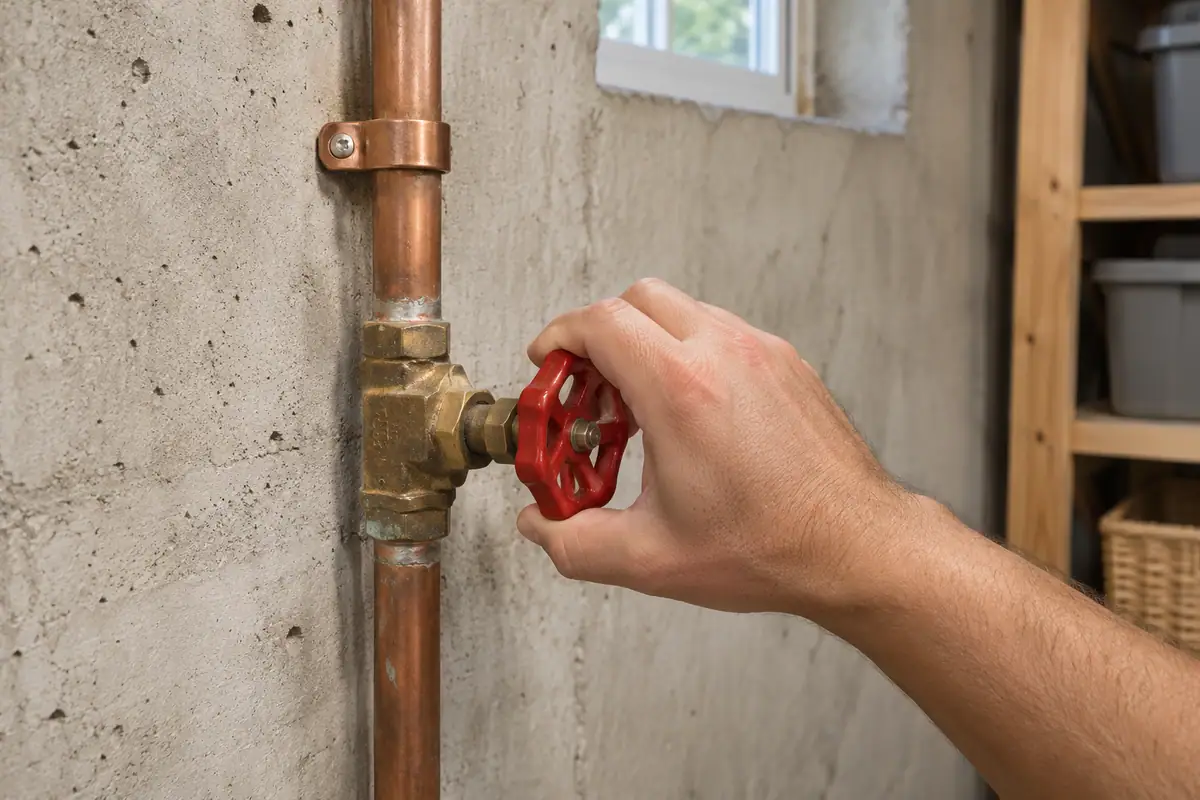
- Identify the valve type. A lever handle is a ball valve. A round wheel is a gate valve.
- Close a ball valve with a quarter turn. Turn the lever until it sits across the pipe.
- Close a gate valve clockwise. Turn the wheel to the right until it stops, without forcing it.
- Open a faucet to check. If the water slows to a stop, the valve works.
- Label it. Tie a tag on the valve so anyone in the house can find it.
Water still flowing once it is shut means the valve is worn. Our burst pipe repair page covers the steps until the plumber arrives.
Ball valves and gate valves
Newer homes usually have a ball valve, which closes reliably with a quarter turn. Older homes often have a gate valve, which can stiffen or fail to seal after years without use.
- Ball valveLever handle, quarter turn to close.
- Gate valveRound wheel, several turns clockwise.
- Curb valveAt the meter, for the city side.
- Fixture valvesUnder sinks and behind toilets.
Water running and the valve will not budge?
Skip the pry bar, it can snap the stem. Collect the water, switch off wet rooms at the panel and phone us.
If the main water shutoff valve will not turn
A gate valve that has not moved in years can seize. Gentle, steady pressure with your hand is fine. A wrench or a cheater bar can snap the stem and make the leak worse.
A plumber can replace a stuck or leaking main valve with a ball valve, which is easier to close in an emergency. It is a small job that matters the first time a pipe bursts.
Main valve, fixture valves and the curb valve
Knowing which valve stops which water means you never shut off more than you need to.
Main water shutoff valve
- Stops water to the whole house.
- Indoors, at the point the supply line comes in.
- Use it for burst pipes and unknown leaks.
- Test it once or twice a year.
Fixture and curb valves
- Fixture valves stop one sink, toilet or appliance.
- They sit under sinks and behind toilets.
- The curb valve at the meter stops the line from the street.
- It usually needs a special key to turn.
Make the valve easy to find
A shutoff valve only helps if someone can reach it quickly. A few small changes make that much easier.
- Keep the space in front of the valve clear of boxes, shelves and storage.
- Tie a bright tag on the handle so it stands out in a dim basement.
- Write the location on a note by the breaker panel.
- Show every adult and older teenager in the house where it is.
- Add a flashlight on a hook near the valve.
If the valve sits behind a finished wall, ask a plumber about an access panel when you book any plumbing repair.
Main water shutoff questions
Should everyone in the house know where the valve is?
Yes. Walk every adult at home to the valve and have each one close it once. A leak rarely happens when the person who knows is home.
Is it safe to close the main valve?
Yes. Closing it only stops water to the house. For a longer shutoff, switch the water heater off as well so it never heats with no fresh supply arriving.
Will closing the valve stop a leak in the yard?
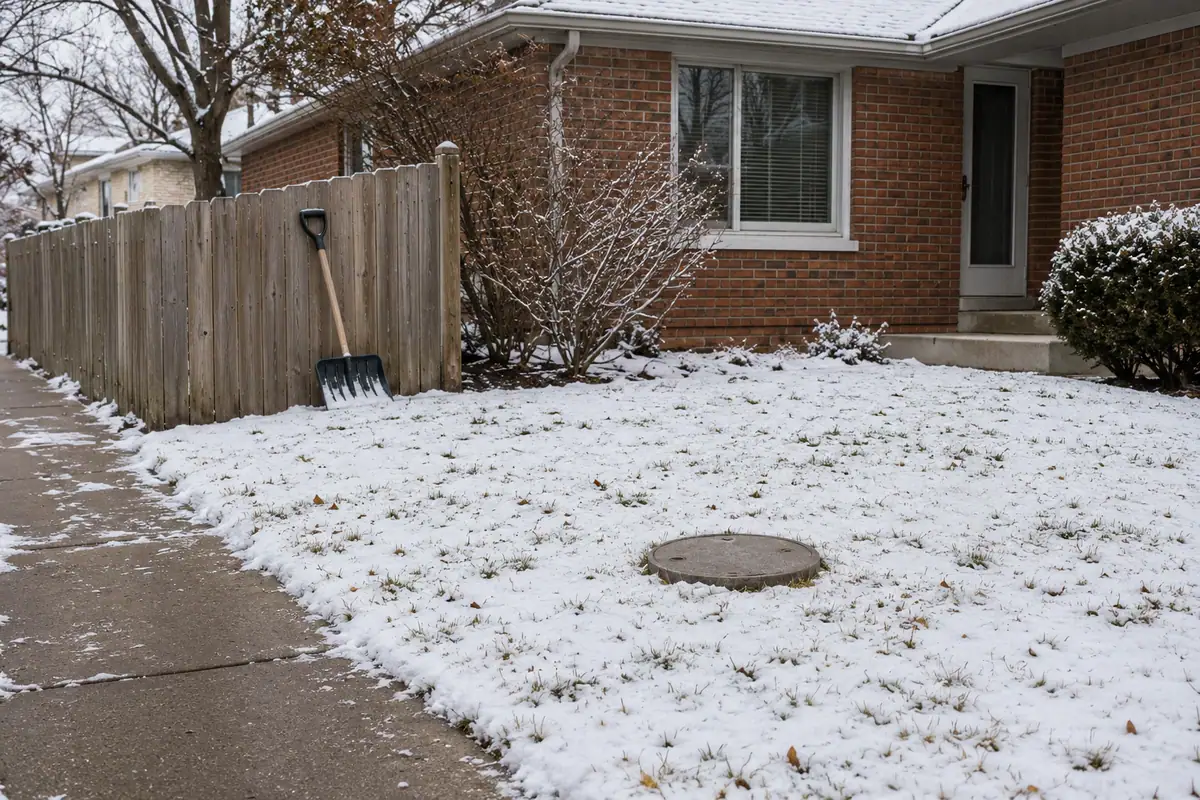
No. A break between the meter and your foundation is upstream of it, so only the curb valve at the meter stops it. That is when to call about water line repair.
How often should I test the valve?
Once or twice a year is enough. Close it, check a faucet and open it again. A valve that is exercised stays easy to turn.
What if my house has no main valve?
Some older homes have only the curb valve. A plumber can add a main valve inside, which makes any future emergency much easier to handle.
Do I need a plumber to turn the water back on?
No, you can open it slowly once the leak is repaired. Open it partway first, then fully, so air and pressure settle gently through the pipes.
Why does my main valve leak after I close it?
Older gate valves often have a packing nut around the stem that leaks a little when the valve is turned. A gentle quarter turn on the nut can stop it. If water keeps dripping, the packing or the whole valve needs replacing, which a plumber can do.
Can I replace the main water shutoff valve myself?
It is not a good do it yourself job, since the curb valve has to be closed first and the new valve joined to the incoming supply. A plumber replaces it with a ball valve in a short visit.
What is the valve next to the water heater?
That is the cold water supply valve for the heater. Closing it stops water entering the tank, which is useful for flushing or a tank leak, but it does not stop water to the rest of the house.
Does the main valve also shut off outdoor faucets?
Yes. Outdoor faucets are fed from inside the house, so closing the main stops them too. Some homes also have a separate small valve for each outdoor faucet, which is worth knowing about before winter.
How do I turn the curb valve at the meter?
The curb valve usually needs a long key that reaches down into the meter pit and fits the valve head. Many homeowners do not have one. If you need the water off and the main valve inside has failed, call us and the plumber can close the curb valve.
Is it wise to shut the main valve before a winter trip?
Yes, for anything longer than a long weekend in cold weather. Close the main valve, run the basement faucet until the pipes empty and turn the water heater down or off. Keep the heat on in the house.
Can I add a second shutoff valve?
Yes. A plumber can add valves to sections of the plumbing, such as an outdoor faucet line or a bathroom, so you can shut off one area without cutting water to the whole house. It makes future repairs and emergencies simpler.
Why is my main valve so hard to turn?
Gate valves that are rarely used build up mineral deposits on the stem and gate, which makes them stiff. Turning the valve gently once or twice a year keeps it moving. If it will not budge with hand pressure, have a plumber replace it.
Can I find the main valve from outside?
Not usually. The main water shutoff valve sits inside the house where the line comes through the foundation. The water line enters on the side facing the street, so start looking on that wall indoors.
What does it mean if the valve is behind a wall?
Some finished basements hide the main valve behind drywall or paneling. Look for a small access panel on the street side of the basement. If there is none, a plumber can add one so the valve is reachable.
Should a renter know where the main valve is?
Yes. A leak can start while the landlord is unreachable. Ask where the main valve is when you move in, and keep the landlord and our number handy in case you need to stop the water.
Where to go next
Once you know where the valve is, these pages help with whatever made you look for it.