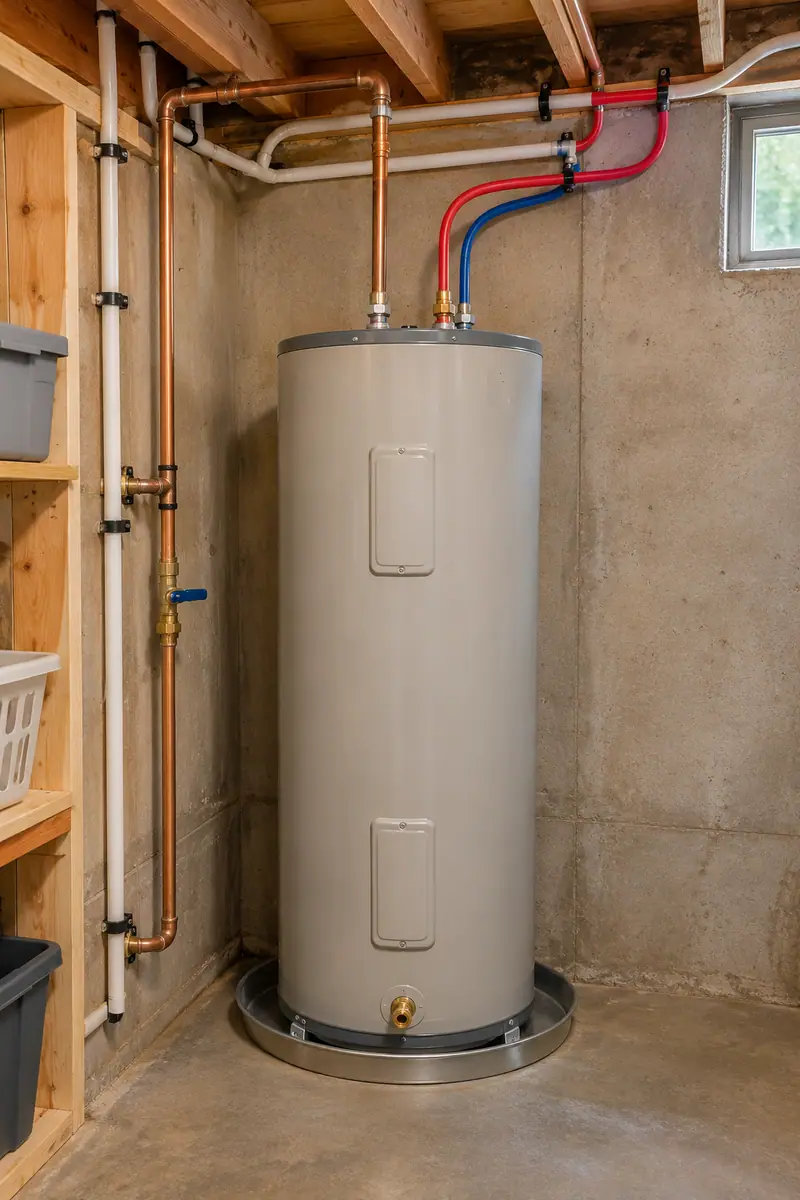
How to Flush a Water Heater, Step by Step
Draining the sediment once a year keeps a tank water heater quieter, heating evenly and lasting longer, and most homeowners can do it in an afternoon.
Go to the stepsHow to flush a water heater in eight steps
Read all the steps before you start. If anything looks corroded or will not open, stop and call us about water heater repair.
- Shut down the heating. Flip the breaker on an electric model, or turn a gas control to pilot or off.
- Shut the cold inlet valve. This stops new water entering while you drain.
- Let the water cool. Wait a few hours, because tank water can scald.
- Attach a garden hose to the drain valve. Run the other end to a floor drain or outside.
- Open a hot water faucet upstairs. Air coming in lets the tank drain freely.
- Open the drain valve. Let the water run until it comes out clear.
- Stir up the last sediment. Open the cold valve briefly with the drain still open, then close it again.
- Close the drain, refill and restore heat. Fill until the upstairs faucet runs steadily, then turn the power or gas back on.
Why sediment builds up in the tank
Every heating cycle leaves a little mineral grit on the tank floor. Over months they form a layer that traps heat, makes popping sounds and shortens the life of the tank.
- Uneven heatingHot water runs out sooner.
- Popping noisesWater boiling through the layer.
- Cloudy waterSediment stirred into the supply.
- Strain on the tankMore wear on the bottom and burner.
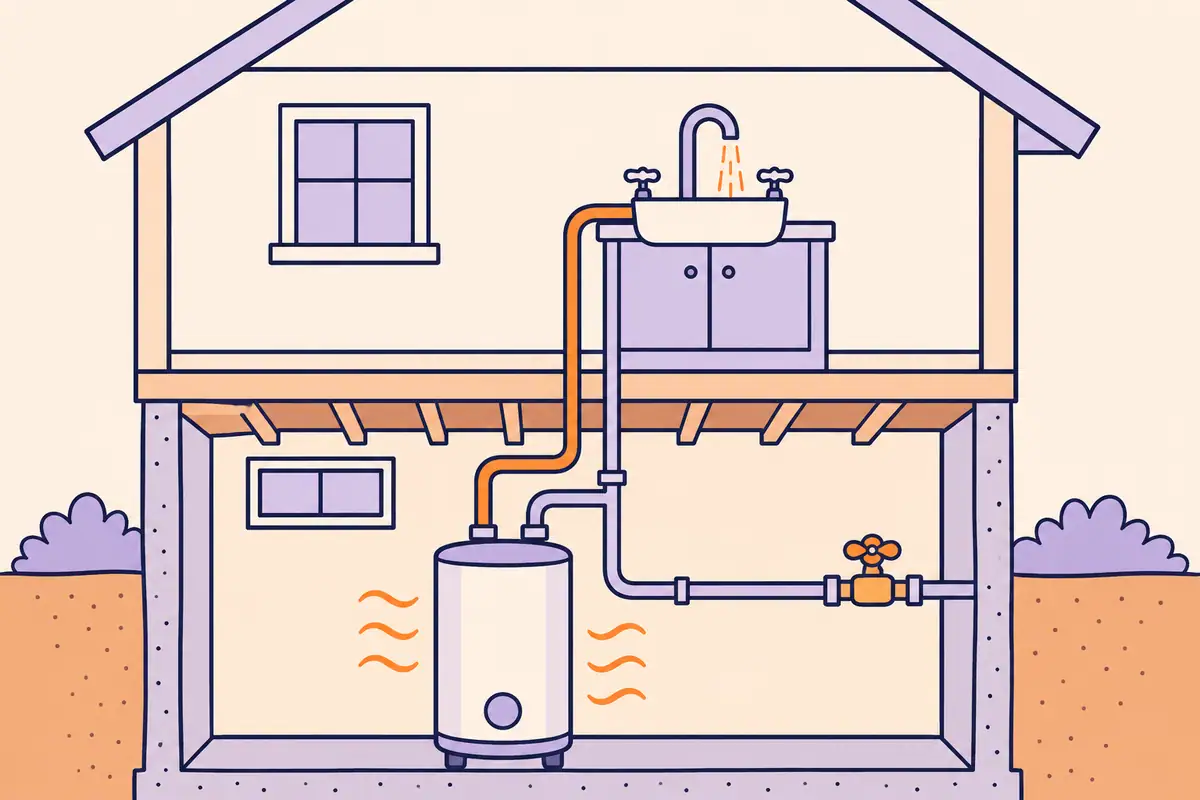
Gas and electric tanks are flushed a little differently
Knowing how to flush a water heater of each type keeps you safe during the job.
| Step | Gas tank | Electric tank |
|---|---|---|
| Turning off the heat | Set the gas control to pilot or off. | Switch off the breaker for the tank. |
| Restarting | Relight the pilot by the label instructions. | Turn the breaker on only after the tank is full. |
| Main risk | A gas smell when relighting. | Elements burning out if heated while empty. |
| When to stop | Any smell of gas. | A breaker that trips again. |
Drain valve will not close after flushing?
Shut the cold supply above the tank, leave the hose connected and phone us about the stuck valve.
When to stop and let a plumber take over
Knowing how to flush a water heater includes knowing when not to.
Stop and call us
- The drain valve is crusted or will not open.
- Water leaks from the tank body, not a fitting.
- You smell gas at any point.
- Rusty water keeps coming after a full flush.
Normal during a flush
- Cloudy or sandy water at first.
- Popping sounds when the heat comes back on.
- Air sputtering from faucets after the refill.
- A slow drain from a nearly blocked valve.
After the flush
Check the drain valve for drips once the tank is full, and look again an hour after it reheats. A small drip from the valve can usually be stopped with a gentle extra turn or a cap on the outlet.
Make a note of the date so you flush again next year. If the tank is old and the water still comes out rusty, read about leak detection and watch the floor around the tank.
What you need before you start
Gather everything first so you are not hunting for a hose with a tank half drained.
- A garden hose long enough to reach a floor drain or the outdoors.
- A bucket for the first water out of the valve, so you can see the sediment.
- A flat screwdriver for valves with a slotted stem.
- Gloves, because the drain valve and the water may still be warm.
- A towel for drips at the hose connection.
If the drain valve is plastic and looks brittle, be gentle with it. A cracked valve is a water heater repair job rather than a flush.
Sediment, water and your tank
How fast sediment builds up depends on the water. Hard water leaves more minerals behind, so a tank may need flushing more often.
Knowing how to flush a water heater is one of the simplest ways to keep the tank working well. If the water stays rusty, or the tank leaks, read about leak detection and call us.
Read about water heater repairWater heater flushing questions
How often should I flush a water heater?
Once a year suits most homes. Very hard water may need it every six months, and a tank that has never been flushed may need a plumber if the drain valve is clogged.
Can flushing an old tank cause a leak?
On a very old tank, stirring up heavy sediment can expose a weak spot. If the heater is nearing retirement, check with a plumber first.
Do tankless heaters need flushing?
Tankless units need descaling rather than draining, which uses a pump and a cleaning solution. It is a different job from a tank flush.
Why is the water still cloudy after flushing?
Some fine sediment stays suspended for a day or two. If it does not clear, or the water looks rusty, the tank may need water heater repair.
Do I need to drain the whole tank?
Not always. Draining a few gallons until the water runs clear removes most loose sediment. A full drain helps when the tank has not been flushed in years.
What if the pilot will not relight after flushing?
Follow the lighting instructions on the label once. If it still will not stay lit, stop and call us, because the thermocouple may need replacing.
Is it normal for the drain valve to clog during a flush?
Yes, on a tank with a lot of sediment. Close the valve, briefly open the cold supply to stir the sediment and try again. If it stays blocked, stop, because forcing a plastic valve can crack it.
Should I flush a new water heater?
A new tank does not need flushing for its first year. After that, flushing once a year from the start keeps sediment from building up into a hard layer that is difficult to remove later.
Can I flush the tank without turning off the water?
You need the cold supply off to drain the tank, except for the brief moment you open it to stir sediment. Leaving it open the whole time just pushes fresh water through without draining the bottom.
Will flushing fix a water heater that makes no hot water?
Usually not. No hot water points to a pilot, a thermocouple, an element or a breaker rather than sediment. Flushing helps with noises, uneven heating and cloudy water, not a tank that has stopped heating.
How long does it take to flush a water heater?
Allow a few hours in total, most of it waiting for the water to cool. The draining and refilling itself usually takes under an hour for a typical tank, a little longer if there is heavy sediment.
Can I flush the water heater into the yard?
Yes, if the hose can run safely downhill and the water has cooled. Keep it away from plants that do not like mineral heavy water, and away from walkways in freezing weather where it could turn to ice.
What if the water heater makes more noise after flushing?
A little popping right after a flush is normal while loosened sediment settles. If the noise is louder a day later, more sediment may remain, and a second flush or a visit from a plumber can help.
Do I need special tools to flush a water heater?
No. A garden hose, a bucket, gloves and sometimes a flat screwdriver for the drain valve are enough for most tanks. If the valve has a cap, unscrew it before attaching the hose.
What color should the water be when I flush?
The first water is often cloudy or full of tan or white grit, which is sediment. It should run clear by the end. Water that stays rusty brown may mean rust inside the tank.
Can flushing help an old water heater last longer?
Regular flushing helps any tank, but it cannot reverse rust that has already formed. On an old tank that has never been flushed, ask a plumber first, because disturbing heavy sediment can expose a weak spot.
Should I flush a water heater before winter?
Fall is a good time, because the tank works hardest through the cold months. A clean tank heats more evenly and is less likely to struggle when incoming water is at its coldest.
Can I leave the tank empty for a while?
You can leave it empty only with the power or gas off. Heating an empty tank damages electric elements and can overheat a gas tank. Refill it fully before turning the heat back on.
More help with hot water
These pages help when flushing is not enough.