Prevent Frozen Pipes in a Jefferson City Winter
A few steps before the first hard freeze and a few habits on the coldest nights prevent frozen pipes in most homes.
Find the pipes most at riskWhere cold reaches your pipes
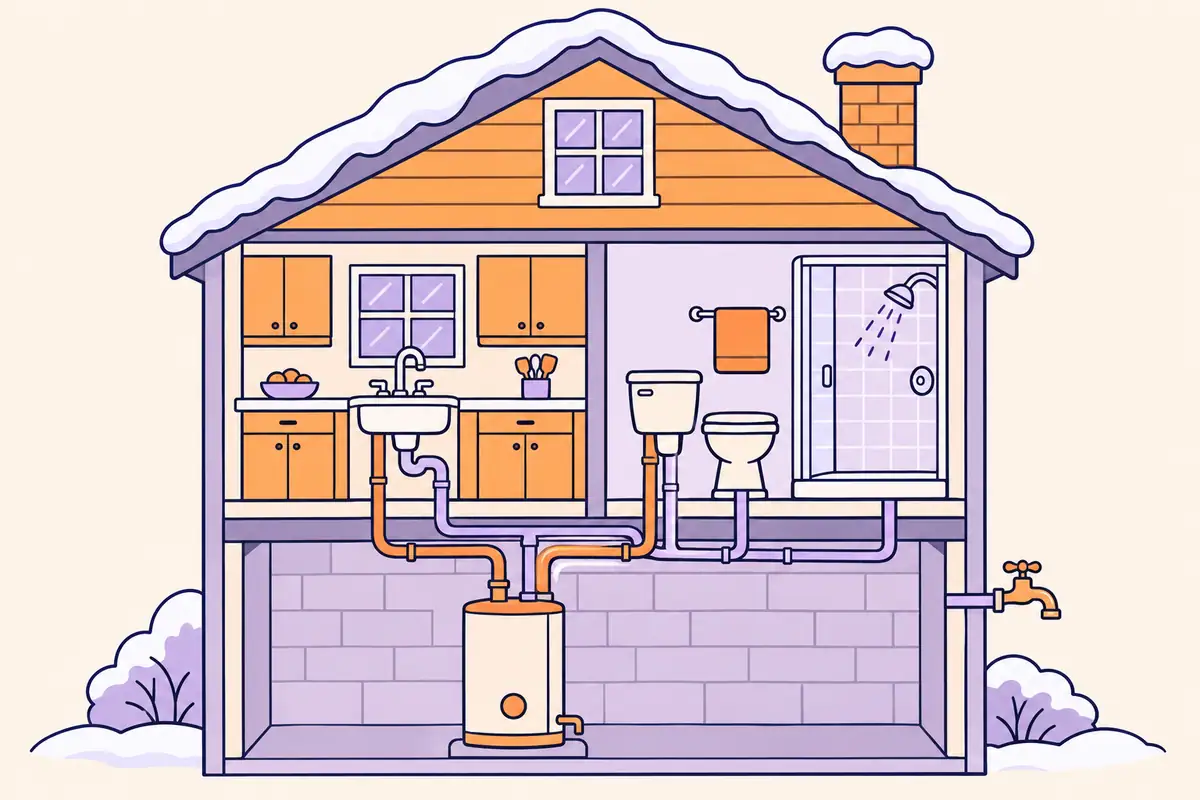
Start with the pipes most exposed. Pipes freeze where cold air reaches them directly, so the risk sits at the edges of the house rather than in the middle.
- Outside wallsKitchen and bathroom sinks on exterior walls.
- Crawl spacesDrafts through vents and gaps.
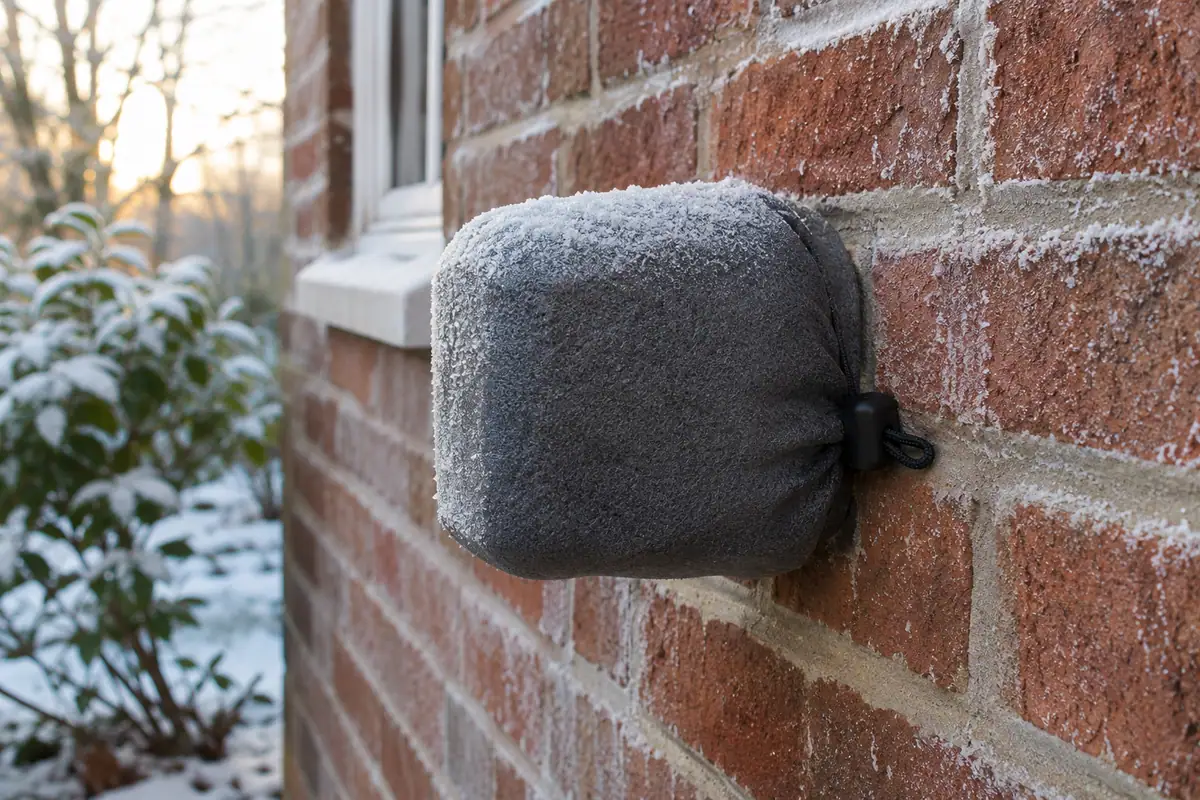
- Outdoor faucetsWater trapped in the line behind the wall.
- Unheated roomsGarages, laundry rooms and porches.
Prevent frozen pipes before the first hard freeze
Fall is the time to get ready, while the pipes are dry and easy to work around.
- Disconnect garden hoses. A hose left on traps water in the outdoor faucet, which can split the pipe inside the wall.
- Shut off and drain outdoor faucets. Close the inside valve for each one if there is one, then open the outdoor faucet to empty it.
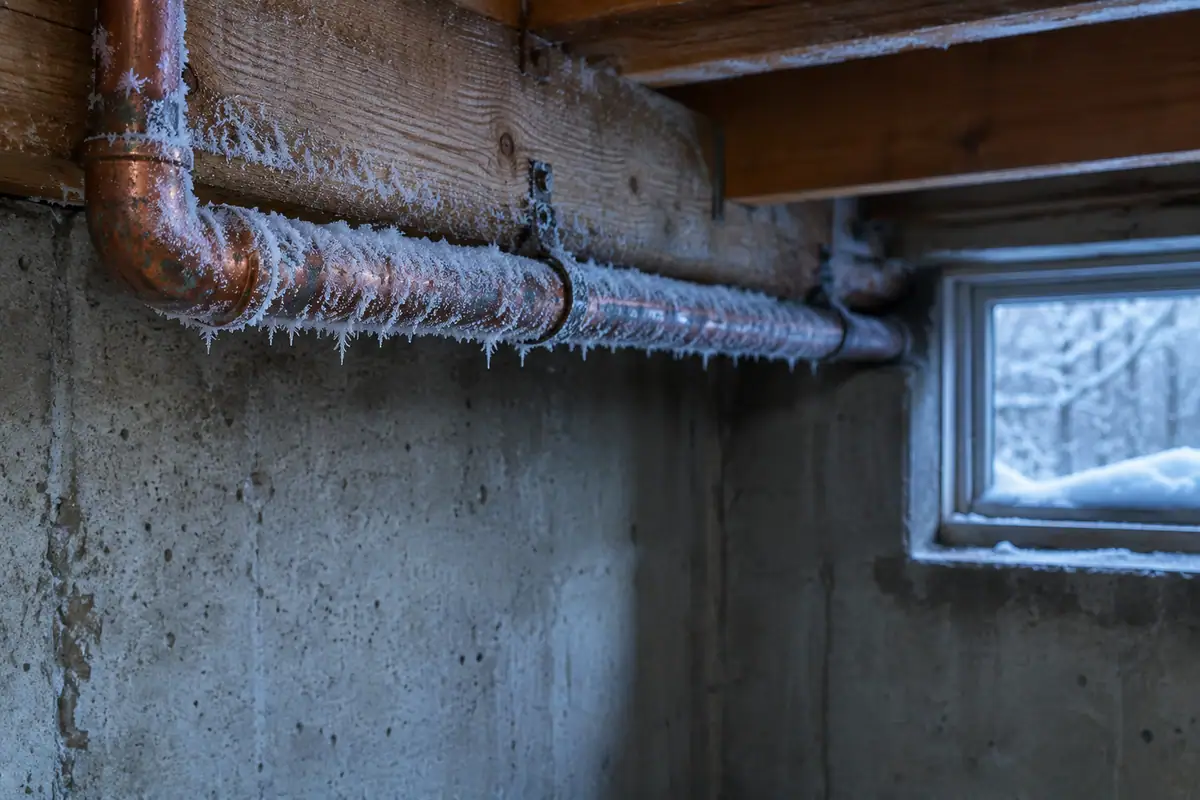
- Wrap bare pipes. Slip foam sleeves over every line you can reach in the crawl space, garage and basement. Nothing protects them more simply.
- Seal drafts. Close crawl space vents for winter and fill gaps where pipes pass through outside walls.
- Check the main valve. Confirm it actually turns, so a split pipe can be stopped in seconds. See our main shutoff guide.
- Have weak spots looked at. A plumber can reroute or protect a pipe that has frozen before. Ask about it when you call about any plumbing repair.
On the coldest nights
When the forecast drops well below freezing, these habits protect the spots that are hard to insulate.
| What to do | Why it helps |
|---|---|
| Prop open the sink cabinets along exterior walls | Warm room air reaches the pipes behind the cabinet. |
| Let a thin stream run from the farthest faucet | Moving water is much harder to freeze and it relieves pressure. |
| Keep the heat steady day and night | A deep setback at night lets cold walls chill the pipes. |
| Keep the garage door closed | It protects pipes and the water heater in the garage. |
| Leave interior doors open | Heat spreads evenly to rooms with plumbing. |
A faucet already stopped this morning?
Ice may already be in the line. Leave the tap open and add gentle warmth, never an open flame.
Going away during a cold spell
Set the thermostat no lower than a moderate temperature, open the sink cabinets on exterior walls and ask a friend to stop by at least every other day. A frozen pipe that bursts while nobody is home can run for days.
For a longer trip, close the main water valve and drain the lines by opening the lowest faucet. The water heater should be turned down or off while the supply is closed.
Signs that a pipe is freezing now
Catching it early is the last chance to stop a frozen pipe from splitting.
Act right away
- A faucet gives a trickle or nothing.
- Frost forms on an exposed pipe.
- A toilet stops refilling.
- You hear water running inside a wall.
Normal on a cold night
- Pipes ticking as they cool.
- Slightly colder water than usual.
- Frost on windows, not pipes.
- A drain that gurgles once.
A winter routine that works
To prevent frozen pipes through a whole Jefferson City winter, spread the work across the season.
Early fall
Disconnect hoses, drain outdoor faucets and add foam sleeves to exposed pipes.
Late fall
Close crawl space vents, seal drafts and test the main water valve.
Cold snaps
Open cabinet doors, run a thin stream and keep the heat steady day and night.
Early spring
Reopen vents and check outdoor faucets for splits before the first use.
Mistakes that let pipes freeze
Most frozen pipes trace back to a handful of small oversights. Avoiding them does more than any single product.
- Leaving a garden hose connected to an outdoor faucet over winter.
- Turning the heat down sharply at night during a cold snap.
- Keeping cabinet doors closed on sinks against outside walls.
- Leaving crawl space vents open through the coldest months.
- Storing boxes against basement walls where pipes run, which blocks warm air.
- Forgetting a garage or porch pipe that froze the winter before.
Frozen pipe prevention questions
At what temperature do pipes freeze?
Pipes in exposed spots can start to freeze when the outside air stays below about 20 degrees for several hours. Pipes in insulated walls hold out longer, while crawl space lines freeze sooner.
Does letting a faucet drip really help prevent frozen pipes?
Yes. A thin, steady stream keeps water moving and lets pressure out if ice does form. Use the faucet at the far end of the house from the supply line.
Is heat tape safe?
Pipe heating cable suits a line that insulation alone cannot protect, as long as it is installed by the instructions and plugged into a protected outlet. Never wrap it over itself.
Do frost free outdoor faucets still need care?
Yes. They only work if the hose is disconnected, so water can drain from the valve. Leave a hose on and even a frost free faucet can split.
Should I close crawl space vents in winter?
For most houses, yes. Shutting or covering the vents during the coldest months keeps freezing air off the pipes. Reopen them in spring.
Can a plumber help before winter?
Yes. A plumber can insulate or reroute pipes that froze before, add shutoff valves for outdoor faucets and check the main valve. Mention it when you contact us.
Which pipes in my house are most likely to freeze?
Lines near exterior walls, under the floor, in the garage and in any unheated room. Kitchen sinks on outside walls are a common trouble spot because the cabinet keeps warm room air away from the pipes. Start there when you prevent frozen pipes for the season.
Do I need to drip every faucet on a cold night?
No. A single tap at the far end of the plumbing from the supply line usually protects the whole run. Add a second faucet on any wall where pipes have frozen before. A thin, steady stream is enough.
Will a smart thermostat setback cause frozen pipes?
A deep setback at night can let cold outside walls chill the pipes inside them. On the coldest nights, keep the heat steady rather than dropping it. A moderate, even temperature does more to prevent frozen pipes than a warm day and a cold night.
What should I check in spring?
Turn on each outdoor faucet slowly and watch the basement wall behind it for water. A faucet that froze during winter may only leak once it is used again. Reopen crawl space vents and look for damp spots under sinks on outside walls.
Is pipe insulation enough on its own?
Foam only holds warmth in, it never supplies any. In a very cold crawl space or garage, an insulated pipe can still freeze during a long cold snap. Combine insulation with sealing drafts, and add heat cable on lines that have frozen before.
Do newer homes need winter pipe care too?
Yes, though newer homes usually have fewer weak spots. Pipes in garages, bonus rooms over garages and outside walls of newer homes can still freeze. The same habits apply on the coldest nights.
How do I protect pipes in a garage?
Keep the garage door closed, insulate exposed lines and seal gaps around the door and walls. During the worst cold, a space heater set well clear of anything flammable can help, provided someone stays nearby while it runs.
Do outdoor faucet covers really work?
Foam covers help by holding a little warmth around the faucet, but they only work together with disconnecting the hose and draining the line. On their own they will not save a faucet with water trapped behind it.
How do I protect pipes in an older home?
Yes. Older homes often have more drafts and pipes closer to outside walls, so sealing gaps and insulating exposed lines matter even more. A plumber can point out the weakest spots during any visit.
When should I start preparing for winter?
Early fall is ideal, before the first hard freeze. Disconnecting hoses, draining outdoor faucets and insulating exposed pipes take an afternoon and do the most to prevent frozen pipes later in the season.
What if a pipe froze last winter?
Treat it as a weak spot. Insulate it, seal any draft near it and keep cabinet doors open on cold nights. If it froze more than once, ask a plumber about moving the pipe or adding heat cable.
Related help for winter
If a pipe has already frozen or burst, these pages pick up from here.